
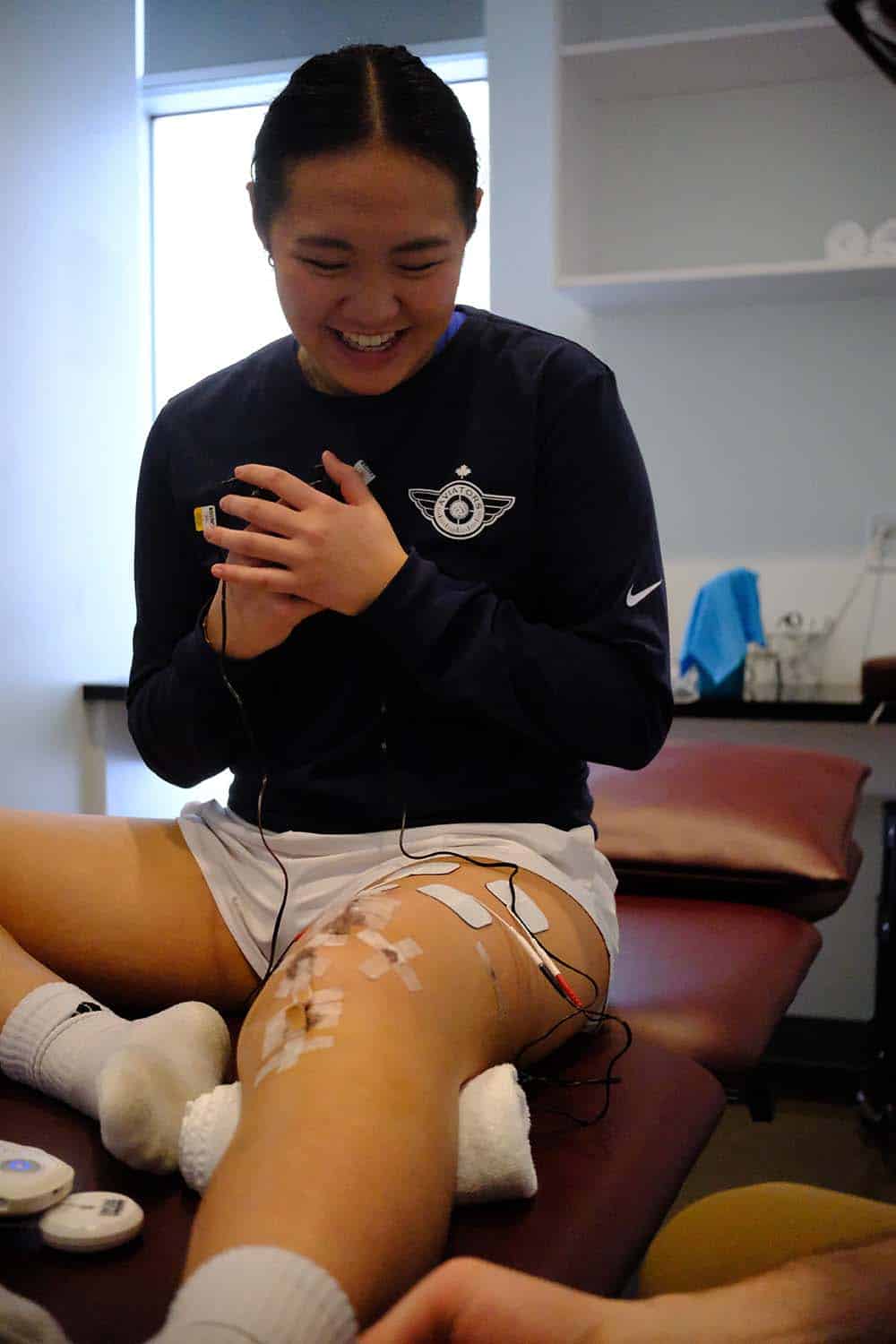
Post-surgical muscle inhibition, also known as arthrogenic muscle inhibition (AMI), is a common protective reflex that inhibits the firing of muscles around an injured area. This often happens post-surgery, such as after anterior cruciate ligament reconstruction (ACLR). One of the primary goals of early post-surgical rehab for ACLR is overcoming AMI. As an adjunct to verbal and tactile cueing with exercise, therapists often use modalities such as neuromuscular electrical stimulation (NMES) to help overcome the AMI speed bump and restore muscle strength. NMES is an electrical modality that delivers impulses through electrodes on the skin to stimulate motor neurons, triggering action potentials and resulting in muscle contractions.

Hauger et al. (2017) investigated the effectiveness of NMES on muscle strength following ACLR. They determined that NMES is not only effective in improving strength but that the timing of NMES application influences its effectiveness. Of the studies pooled in the authors’ meta-analysis, the greatest effect on muscle strength restoration occurred with NMES application after the first post-surgical week. Although Hauger et al.’s (2017) findings suggest an optimal time, it is important to note that a case can be made for the use of NMES within the first post-surgical week to reduce muscle atrophy from decreased activity and movement.
How Much Should NMES Be Used?
The recommended usage of NMES can vary widely. The authors cite variability in previous research, ranging from as little as 3.3 minutes per week to an astonishing 840 minutes per week (14 hours/week; 2 hours/day)(make sure you have plenty of spare batteries). The study did not investigate the effect of duration or frequency, but we recommend using NMES during exercises that require contraction of the thigh. Doing exercises 3-5 times per day could translate to approximately 15 minutes of NMES use per day; however, feel free to increase usage as tolerable. We recommend regular NMES use during the first 12 weeks post-surgery.
What to Focus on in the First Week
If NMES is delayed, what should be prioritized in the first week? The reality is that the first week post-surgery can be overwhelming. Patients are managing pain and swelling while also dealing with fear and anxiety about movement. Simple daily activities—like getting up, showering, and moving around—suddenly become major challenges.
From our experience, the most helpful approach in the first week is regular attendance at physiotherapy to focus on the basics. We break these into three key components:
- Reassurance
- Range of motion
- Muscle recruitment
During our first sessions, we answer common patient questions such as:
- “Are these strips supposed to be peeling?”
- “Is it normal for [blank] to happen?”
- “Should I be worried about [blank]?”
- “When should I start using my muscle stim unit?” (which inspired this blog).
Pro Tip: Carving out time before surgery to lay out a clear post-op plan and understand what to expect can help minimize anxiety and stress during the initial recovery period.
In the first week, we also monitor for infection and assess incision site healing. Beyond that, we focus on the low-hanging fruit—range of motion and gait restoration. Hands-on manual therapy helps patients gain confidence in moving through stiffness and mild discomfort. Many patients are afraid to move, so normalizing movement within their tolerance provides a foundation for them to start working on their surgical limb independently.
Setting the intent for muscle recruitment during each exercise is crucial. One of the most overlooked and underrated aspects of early rehab is the intentional activation of muscles in proper positions and movement patterns. This foundation plays a significant role in long-term success. In the first few months, patients will build confidence and progress quickly, so staying proactive is key.
Occasionally, patients compensate to reach their next milestones—e.g., hip hiking during hurdle stepping. We always educate patients on compensation strategies and remind them that early rehab is an opportunity to refine movement quality. Where patients may benefit most in this phase is through tactile, verbal, or visual cueing to correct compensations. Therapists should use all available tools to ensure quality outcomes. Effective tools for ACL rehab in the first week include full-length mirrors, hands-on guidance, hurdles, pylons, and feedback tools like BOSUs. Creativity is key—patients can also use household items to aid their exercises at home.

First-Week Milestones
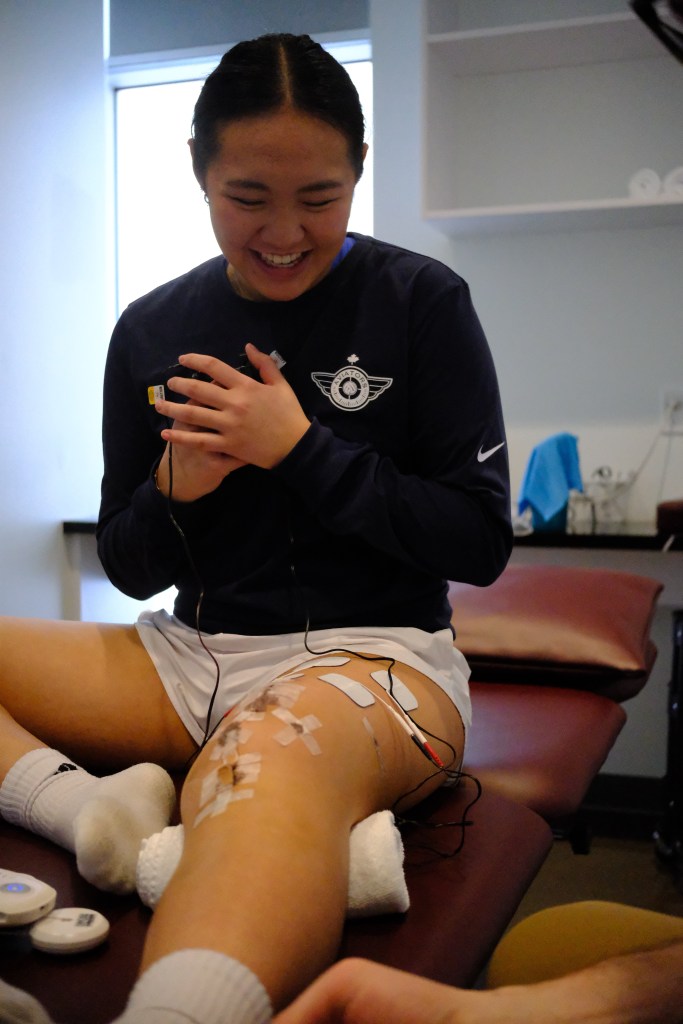
From our experience, by the end of each session, fear often transforms into excitement and a sense of accomplishment. By the end of the first week, both the therapist and patient typically achieve a few key milestones. To give perspective on a recent ACL patient’s first-week progress, here are three major achievements over their first three sessions:
- Sitting comfortably with the knee hanging off the edge of the bed for the first time
- Moving the surgical limb without hand assistance and beginning weight shifting
- Activating the quadriceps appropriately
These milestones may seem minor but are often significant and memorable, especially in the first week of recovery. Patients are usually scared following surgery, and if they have never experienced a major injury before, they may feel incredibly fragile. The gap between their pre-surgery lifestyle and their current state can feel like an ocean-wide divide. Our job is to show them that this “ocean” is only a mile wide but an inch deep—and that the water is actually pretty warm.
Final Thoughts
To the therapists and patients reading this—enjoy your first week! It’s the first of many future milestones and achievements.
Radek Wiechecki
Physiotherapist
References
Hauger, A. V., Reiman, M. P., Bjordal, J. M., Sheets, C., Ledbetter, L., & Goode, A. P. (2018). Neuromuscular electrical stimulation is effective in strengthening the quadriceps muscle after anterior cruciate ligament surgery. Knee Surgery, Sports Traumatology, Arthroscopy, 26(2), 399-410.